

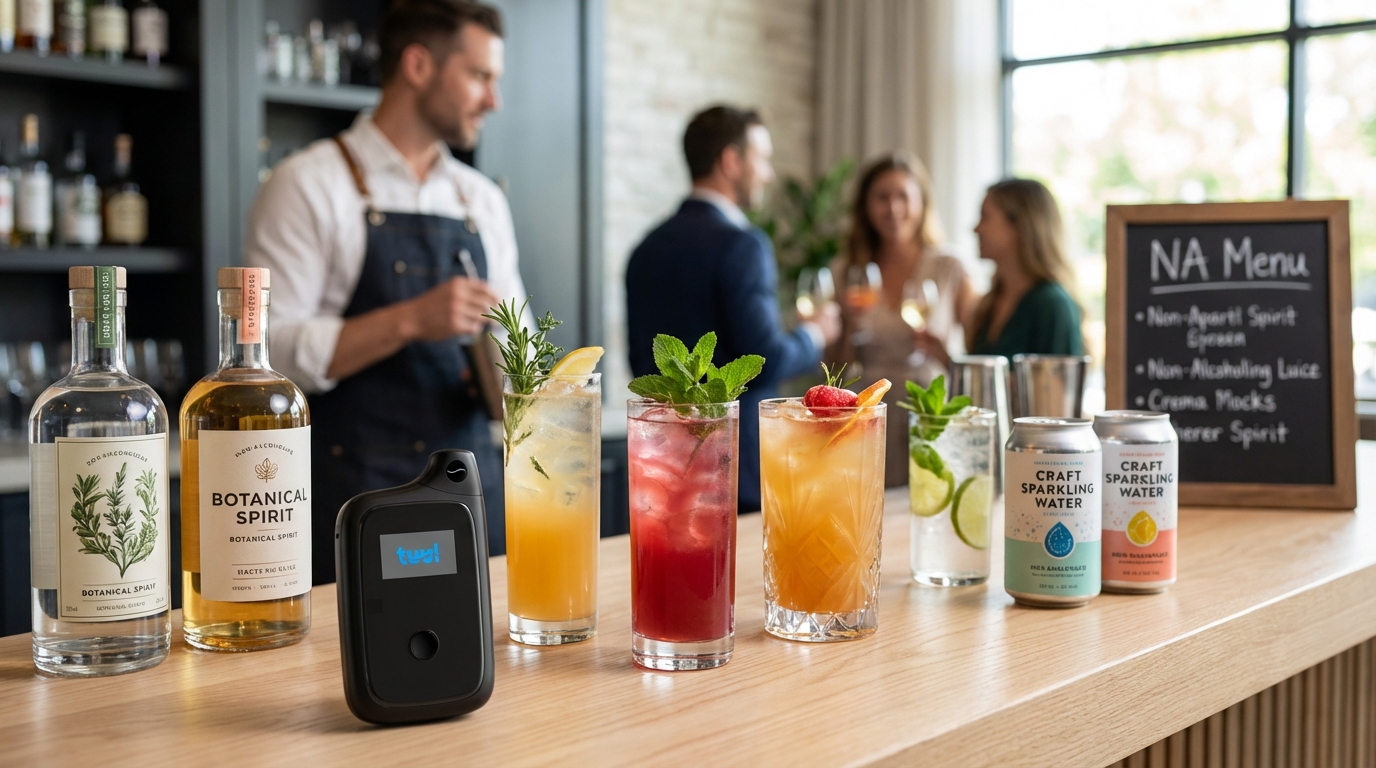
Walk into any well-stocked grocery store or trendy bar, and you’ll notice something new: an expanding selection of non-alcoholic beers, wines, spirits, and ready-to-drink options that didn’t exist five years ago. The NA drink category has exploded from a niche market of bland substitutes into a sophisticated industry offering genuinely enjoyable alternatives to alcohol.
This shift reflects changing attitudes toward drinking. More people are questioning their relationship with alcohol—not necessarily quitting entirely, but seeking balance, reducing consumption, or simply wanting options beyond water and soda when they choose not to drink. The result is a revolution in what “not drinking” actually looks like.
Why Non-Alcoholic Drinks Are Booming
The Sober Curious Movement
Sober curious describes people who question their drinking habits without necessarily identifying as alcoholics or committing to complete sobriety. They might skip alcohol on weeknights, take extended breaks like Dry January, or simply drink less than they used to. This growing demographic wants sophisticated drink options that don’t feel like deprivation. The NA market responds directly to their needs.
Health and Wellness Priorities
Health consciousness has reached drinking culture. People tracking calories, optimizing sleep, and prioritizing mental health recognize alcohol’s costs. NA drinks offer the ritual and taste of drinking without the hangover, sleep disruption, or empty calories. For fitness enthusiasts, athletes, and wellness-focused individuals, quality NA options make moderation easier and more enjoyable.
Better Products Than Ever
Early non-alcoholic beers deserved their bad reputation—watery, cardboard-tasting, barely recognizable as beer. Modern NA production techniques have transformed the category. Craft brewers apply the same care to NA beers as their alcoholic versions. NA spirits capture botanical complexity. NA wines have improved dramatically. You no longer have to sacrifice taste for sobriety.
Social Acceptance
Choosing not to drink carries less stigma than it once did. Millennials and Gen Z drink less than previous generations and are more open about it. Bars and restaurants increasingly offer thoughtful NA options rather than just soda. The cultural shift makes choosing NA socially easier, which drives demand, which drives better products—a virtuous cycle.
Non-Alcoholic Beer: The Most Developed Category
How NA Beer Is Made
Most NA beers start as regular beer, then have alcohol removed through heating (which evaporates alcohol at lower temperatures than water), vacuum distillation, or reverse osmosis. Some brewers use specialized yeasts that produce minimal alcohol during fermentation. Each method affects flavor differently; the best NA beers use techniques that preserve hop character and malt complexity.
What to Look For
Look for NA beers from craft breweries that approach the category seriously rather than as an afterthought. IPAs and hop-forward styles often translate best to NA because hops provide flavor independent of alcohol. Stouts and porters can also work well due to roasted malt flavors. Lighter lagers are improving but remain the most challenging style to replicate without alcohol’s body.
Understanding Labels
“Non-alcoholic” in the US means less than 0.5% ABV—trace amounts comparable to fruit juice or kombucha. “Alcohol-free” typically means 0.0% ABV. For most people, the difference is negligible. However, those in strict recovery programs or with certain medical conditions should know the distinction. Check labels if complete zero is important to you.
Non-Alcoholic Wine: The Biggest Challenge
Why NA Wine Is Harder
Wine relies more heavily on alcohol for its character than beer does. Alcohol contributes body, mouthfeel, and helps carry flavor compounds. Remove it, and wine can taste thin, overly sweet, or like grape juice. The dealcoholization process also strips volatile aromatic compounds that define wine’s complexity. NA wine producers are improving, but it remains the most challenging category.
Best Approaches
Sparkling NA wines often succeed better than still wines because carbonation adds the texture that alcohol would provide. Some producers add tannins or other compounds to replicate wine’s mouthfeel. Others focus on aromatic grape varieties where flavor comes primarily from the fruit. Set expectations appropriately: even good NA wine tastes different from alcoholic wine, but it can still be enjoyable on its own terms.
Alternative Approaches
Some people find more satisfaction in beverages that don’t try to replicate wine but fill the same niche. Fancy sparkling waters, shrubs (vinegar-based drinks), sophisticated juice blends, or tea-based drinks can accompany meals and feel special without attempting wine imitation. Consider what you actually want—the taste of wine specifically, or an elevated adult beverage experience.
Non-Alcoholic Spirits: The Innovation Frontier
How They Work
NA spirits don’t dealcoholize regular spirits—they’re created from scratch using botanical distillation, maceration, and other techniques to capture the flavor profiles of gin, whiskey, tequila, and other spirits without producing alcohol. The result aims to provide similar flavor complexity and cocktail functionality, though the experience differs from alcoholic spirits.
Best Use Cases
NA spirits work best in cocktails where other ingredients contribute significantly—the lime and ginger beer in a Moscow Mule, the tonic and garnish in a G&T, the citrus and sweetener in a margarita. Drinking them straight often disappoints because alcohol’s warming sensation and body are missing. Think of them as cocktail ingredients rather than sipping spirits.
The Functional Ingredient Category
Some NA spirits incorporate adaptogens, nootropics, or other functional ingredients claiming to provide relaxation or mood effects without alcohol. Results vary widely, and evidence for many claims is limited. Approach these with appropriate skepticism while remaining open to products that work for you personally. The placebo effect of holding a “drink” and participating in drinking rituals has real value regardless of ingredients.
Ready-to-Drink NA Options
Canned Mocktails
Pre-mixed NA cocktails in cans offer convenience and consistency. They’re perfect for bringing to parties, keeping in the fridge for spontaneous use, or situations where making a proper mocktail isn’t practical. Quality varies significantly—some taste like sophisticated cocktails, others like flavored soda. Read reviews and be willing to try several brands to find ones you enjoy.
Botanical Beverages
A new category of drinks doesn’t try to mimic alcohol at all but offers complex, adult-oriented flavor profiles for non-drinkers. These botanical beverages use herbs, spices, flowers, and other ingredients to create sophisticated taste experiences. They’re designed to be sipped and savored like a cocktail without pretending to be one. This category often appeals to people who never liked alcohol’s taste anyway.
Upgraded Classics
Premium tonic waters, ginger beers, and other mixers have improved dramatically and can stand alone as drinks. A quality ginger beer over ice with lime feels festive and satisfying. Tonic with cucumber and a splash of elderflower works as a sophisticated refreshment. These upgraded classics bridge the gap between soft drinks and NA alternatives.
Navigating Social Situations
At Bars and Restaurants
More establishments now stock NA options, but selection varies. Call ahead for special occasions or check menus online. Don’t hesitate to ask bartenders—many enjoy the creative challenge of making quality mocktails. If options are limited, soda water with lime looks like a vodka soda and avoids the “why aren’t you drinking” conversation entirely.
At House Parties
Bring your own NA options to parties rather than relying on hosts to provide them. Having something you enjoy in hand reduces temptation and avoids awkward moments searching for alternatives. Quality NA beer or a can of pre-mixed mocktail lets you participate in the drinking ritual without the alcohol. Most hosts appreciate guests bringing their own beverages anyway.
Handling Questions
You don’t owe anyone an explanation for not drinking, but having a casual response ready reduces awkwardness. Options include: “I’m driving,” “Taking a break,” “Not tonight,” or simply “I’m good with this.” Delivered confidently, any response works. Most people don’t actually care what you’re drinking—they’re focused on their own experience.
Building Your NA Home Bar
Stock your home with NA options so you always have something satisfying available. Start with a few NA beers in styles you enjoy. Add a quality NA spirit or two—a gin alternative for G&Ts and a whiskey alternative for old-fashioned variations cover common cocktails. Keep premium mixers on hand: good tonic, ginger beer, and interesting sodas. Fresh citrus and simple syrup enable countless mocktail variations.
Having NA options readily available makes choosing not to drink easier. When your refrigerator offers something genuinely appealing, skipping alcohol feels like choosing a good option rather than missing out. This matters most after work or in the evening when the desire for a drink often strikes—having satisfying alternatives immediately available changes the calculation.
The Bottom Line
The non-alcoholic drink category has transformed from disappointing substitutes into genuinely enjoyable options. NA beers now rival their alcoholic counterparts in flavor complexity. NA spirits enable satisfying cocktails without intoxication. Ready-to-drink options offer convenience and variety. The products continue improving as the market grows.
Whether you’re sober curious, moderating your drinking, in recovery, or simply want options for nights when you’d rather not drink, quality NA alternatives now exist. Experiment with different categories and brands to find what works for you. Not drinking no longer means settling for water and soda—it means choosing from an expanding universe of sophisticated options.
|
Supporting Your Mindful Drinking Journey The Tuul Breeze is a professional-grade portable breathalyzer for people who want to understand and manage their alcohol consumption. Whether you’re mixing NA and alcoholic drinks or tracking your moderation efforts, objective data helps you stay in control of your choices. |
Frequently Asked Questions
Can people in recovery drink NA beer?
This is personal and sometimes controversial. Most NA beverages contain trace alcohol (under 0.5% ABV), similar to kombucha or ripe fruit. Some people in recovery avoid them entirely to prevent triggering cravings or romanticizing drinking. Others find them helpful for social situations. Discuss with your sponsor, counselor, or support network to determine what’s appropriate for your recovery.
Are NA drinks actually healthier than alcoholic ones?
Eliminating alcohol removes its negative health effects: liver impact, cancer risk, sleep disruption, and calorie load. However, many NA drinks still contain sugar and calories. They’re generally healthier than their alcoholic equivalents, but they’re not health foods. Read nutrition labels if you’re watching sugar or calorie intake.
Why are NA drinks often expensive?
Premium NA products use quality ingredients and sophisticated production processes. The market is also smaller, limiting economies of scale. Additionally, NA drinks compete psychologically with alcoholic versions, so pricing reflects positioning as a premium alternative rather than a budget option. Prices may decrease as the market grows and production scales.
Will NA drinks show up on a breathalyzer?
Drinking one or two NA beverages with under 0.5% ABV won’t register on a breathalyzer for most people—the trace alcohol metabolizes quickly. However, consuming many NA drinks rapidly could theoretically produce a very low reading briefly. If you’re subject to testing that requires absolute zero, verify with your specific monitoring program about NA beverage policies.
Where’s the best place to find NA options?
Selection is growing everywhere. Specialty bottle shops often have the best variety. Whole Foods, Total Wine, and similar retailers typically stock good selections. Online retailers dedicated to NA drinks offer the widest variety with home delivery. Even mainstream grocery stores now carry basic NA beer and wine options. Restaurant and bar availability is improving but remains inconsistent.